
Quiet support for a
very personal problem
Incontinence is more than a physical symptom. It quietly reshapes how you move through each day. This service exists to make finding help feel calmer, simpler, and more human.
The part that is often unseen

Incontinence is a symptom of underlying issues. It can alter everything — from how someone moves through their day, to the confidence with which they travel, to how freely they socialise.
The worry about the symptoms is heavy, even when they are mild. It is then that people start planning around toilets. They keep spare clothes close. They avoid long journeys. Laughter comes with a second thought, so does sneezing — lifting — exercising — and saying yes to plans that, at one point, likely seemed easy.
That is often the unseen part. One aspect of the experience is the symptom itself. There are also the emotional ramifications, which weigh just as heavily. A lot of people talk about a quiet frustration, embarrassment, or loss of self-esteem. Some say they have been silently coping for far too long. Others are not sure if they should even mention their problem since it may not feel serious enough. Many avoid support not due to a fear of seeking help, but because the topic simply feels too close to home.
For a lot of people, the first step is not actually treatment. It is about being understood.
And that is why incontinence Direct exists. It provides a quiet, professional pathway for men and women who want support, free of judgemental scrutiny, overwhelming pressure or unnecessary upheaval. The service is focused on non-surgical treatment, privacy and comfort, and practical care that fits real life.
A different kind of care
Incontinence Direct is built on the understanding that how care feels is as important as the care itself. People come to this service at different stages. Some have just noticed early signs. Others have been quietly managing for years. What they share is a need for support that feels approachable and human — not clinical and distant.
This means more than offering effective treatment. It means creating an environment where people feel genuinely comfortable asking for help in the first place.
More personal than it first appears

The motivations behind why people seek help for incontinence are often more personal than expected. For some, it starts with a minor leak during exercise or laughter. For others, it is the urgency that makes even brief outings feel anxious. Bowel control issues might have made social situations feel difficult for years. Others experience symptoms due to childbirth, surgery, ageing, or changes in pelvic floor strength. Some may have sexual health concerns that are connected to those same symptoms.
In each instance, the concern can subtly impact self-esteem, confidence and independent living. What makes this harder is that most people do not speak about it. They adapt. They hide it. They live around it. They discover which clothes feel the safest. They learn where the closest toilets are. They shorten journeys. They avoid certain activities. They cease to feel entirely comfortable in their own rhythm. After a while, this gets tiring.
Support should not only be for the worst cases. We should find support when the things that fill our lives come up short.
Incontinence Direct exists to provide a better way forward. The service was designed to be discreet, reliable and respectful — for those who want something more than a quick answer. It is also for people who feel unsure whether their symptoms are serious enough to warrant care. That uncertainty is common. Many wait too long, thinking they should simply be managing. However, if the issue is affecting confidence, routine or comfort, it deserves to be addressed.
To make care feel accessible. To make the problem feel less lonely. To guide people from silence to support. And to do that in a way which feels kind, human and easy to trust.
Practical care for real concerns
Incontinence Direct offers non-surgical treatment for both men and women experiencing a range of continence and pelvic floor issues. The service is built around EMS therapy and a care plan that focuses on support where it is needed most, rather than invasive surgery.
Urinary Incontinence
One of the most frequent reasons people seek help, and one of the least openly discussed. Bladder leaks, urgency and control challenges can affect daily confidence in significant ways. Non-surgical treatment helps address these concerns practically and discreetly, supporting the muscles responsible for bladder control without the need for surgery or medication.
Stress Incontinence
Leakage that happens during physical activity — coughing, sneezing, laughing, lifting or running — can quietly change the way a person moves through life. Exercise gets avoided. Spontaneity disappears. Treatment focuses on strengthening the pelvic floor muscles that are placed under pressure during these moments, helping restore trust in the body during everyday activities.
Overactive Bladder
Sudden, difficult-to-ignore urges to urinate — frequent bathroom trips, interrupted sleep and the constant awareness of where the nearest toilet is — can quietly drain confidence and limit daily freedom. Treatment works to support bladder stability and reduce urgency-related symptoms without invasive procedures or medication.
Mixed Incontinence
Some people experience both leakage during activity and sudden urgency at the same time. Managing two sets of symptoms simultaneously can be particularly disorienting and difficult to explain. Care plans are tailored to address both types of concern together, providing a more stable and grounded foundation than generic approaches allow.
Stool Incontinence & Pelvic Floor Support
Bowel control concerns carry a particularly heavy emotional weight. Many people find this the most difficult symptom to discuss, yet it is genuinely common and treatable. Treatment approaches this with the highest level of respect and sensitivity, providing a clear and compassionate path forward that does not require the person to feel exposed or judged.
Erectile Dysfunction Support
For men, erectile dysfunction can affect intimacy, confidence and self-image in deeply personal ways. Many avoid seeking help because the subject feels too sensitive. Support here is quiet, respectful and practical — focused on strengthening pelvic floor function and circulation through non-surgical EMS therapy that requires no medication, no invasive procedures and no downtime.
A service designed to feel under the radar
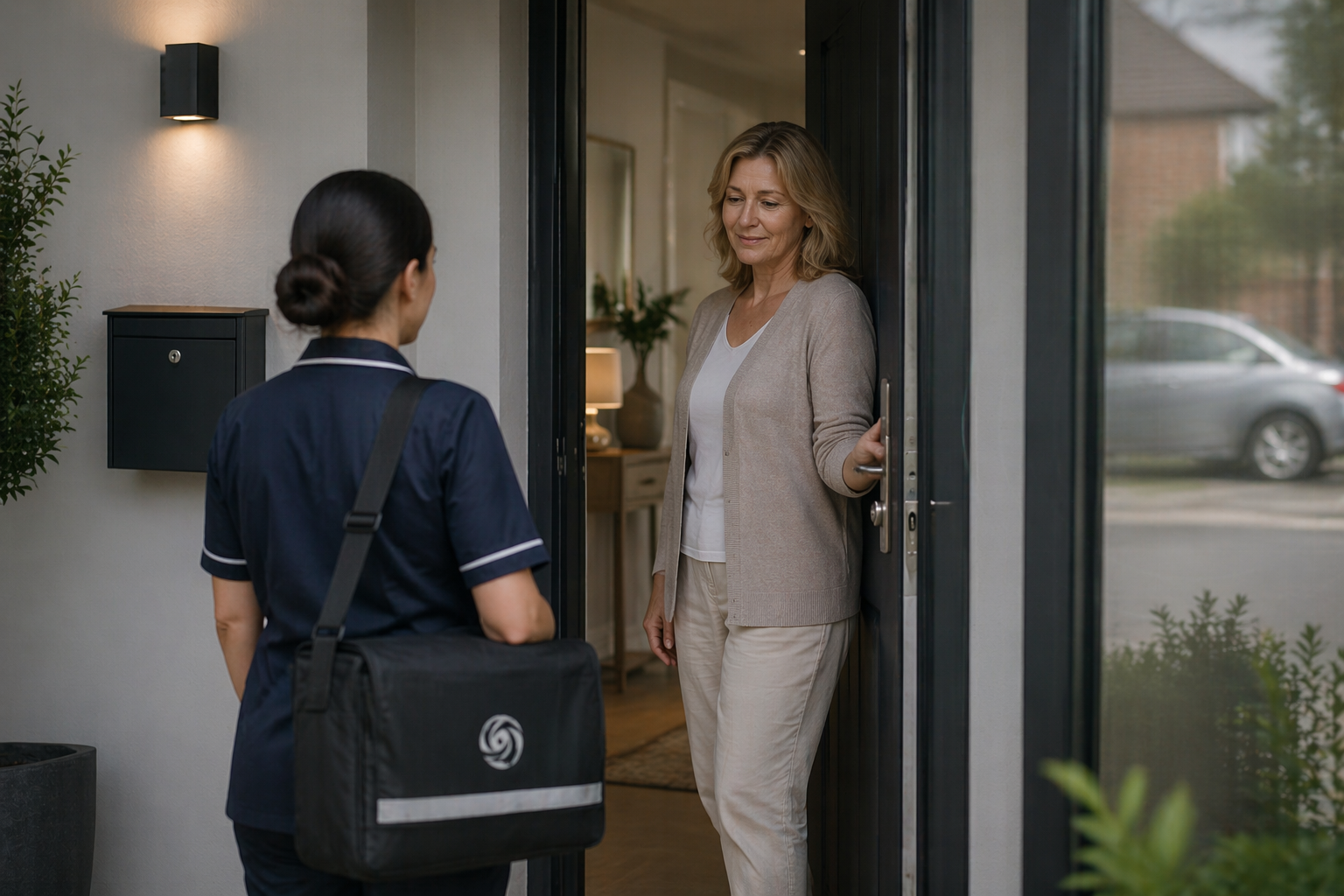
Discretion is one of the most important aspects of incontinence care. The subject is personal. Bladder leaks, urgency, bowel control issues and pelvic floor concerns are things most people feel deeply uncomfortable discussing — even with people they trust closely. Some have not mentioned it to a single person. The concern goes beyond the physical symptoms. It is also about being judged, misunderstood, or made to feel uncomfortable for having a need.
This is why incontinence Direct places such a high priority on privacy throughout the entire process. When people have the freedom to approach sensitive issues quietly, everything changes. The intimidation that many feel when entering treatment for the first time is greatly reduced. It allows people to focus on what matters most — getting effective, appropriate help.
Online consultations and home treatment options mean privacy is real and not just a promise. No one has to sit in a crowded waiting room if they do not want to.
The service nurtures the feeling of being cared for rather than processed. People are not made to feel like their concern is unusual, awkward, or something to rush through.
So many people avoid treatment because they fear the clinical experience. They do not want to be reduced to a symptom. They want to be seen as a person whose concern genuinely matters.
It reduces anxiety
When the process feels quiet and safe, people feel less exposed. Less worried about what others might see or know. Less afraid of being judged. That reduction in anxiety creates the conditions for care to actually begin.
It creates trust
Trust is not built through promises. It is built through experience. When every part of the service — the consultation, the treatment, the follow-up — respects the person's need for privacy, that trust grows naturally and steadily.
It makes support attainable
Discretion is not a luxury in incontinence care. It is a basic necessity. Often, it lays the groundwork for a person's ability to finally start. When the fear of being found out begins to fade, the whole process becomes far less daunting.
Care that feels personal
Everyone experiences incontinence differently. Some feel symptoms only in certain environments. Many experience them several times a day. Some have leaks during activity. Others have bowel-related concerns. Some have a mix of symptoms that affect confidence in different ways. For others, the change came after surgery, childbirth, ageing or illness.
Incontinence Direct does not follow a generic route. Treatment is personalised — the plan is built around the individual rather than applied as a standard template. That is significant for two reasons. First, it allows for more relevant support. Someone with stress incontinence requires a different approach to someone with overactive bladder or mixed symptoms. Someone with bowel concerns may need a different type of reassurance altogether.
Second, it makes the person feel heard — which matters deeply. Many people struggling with these issues have already spent a long time trying to cope alone. They may have tried exercises, routine changes and self-management techniques to little effect. By the time they ask for help, they want to feel listened to.
Good care does not trap someone into a predetermined journey. It begins with finding out who the person genuinely is and what they need.
That listening is where a personalised approach begins. It acknowledges that the person is not a generalised case. They have specific symptoms, real needs and genuine feelings. They may need privacy. They may need flexible timing. They may need reassurance alongside treatment — sometimes even more than the treatment itself.
Who this service may help
Incontinence Direct caters for a diverse range of people with varying symptoms. Its good for those dealing with any of the following:
Each of these conditions affects daily life differently. They all deserve respectful, non-judgemental and practical care. Incontinence Direct understands that symptoms do not always manifest in tidy, predictable ways. It acknowledges that some may not know how to explain what they are going through. It recognises that the emotional part can be just as significant as the physical.
That awareness can be quietly transformative. It allows people to feel less alone. It reminds them that help is available, and that what they are experiencing is not something they simply have to live with.
A treatment experience that fits around normal life

Perhaps the biggest reason people delay support is the fear that treatment will be difficult to fit into their daily life. That fear is entirely understandable. People are already dealing with a great deal — work, family, travel, appointments, responsibilities. Just because someone is experiencing continence issues does not mean life pauses. Incontinence Direct is designed to work alongside real life with as little disturbance as possible.
Sessions are short
Treatment sessions are designed to be brief and straightforward. According to the service, sessions last around thirty minutes with no preparation time required. There is no need to block out half a day or rearrange complex commitments. The process is light enough to sit comfortably alongside an already full schedule.
That simplicity is more important than it might first seem. For people who are already managing the mental load of living with incontinence, a complicated treatment process adds unwanted burden. Something that fits neatly into a normal day makes starting feel genuinely possible.
Home-based options available
Receiving support in the comfort of home is deeply reassuring for many people. Home is familiar. It is safe. It is personal. And that familiarity matters for a condition as sensitive as incontinence. Incontinence Direct includes home-based treatment as a meaningful part of the service — not just for convenience, but because comfort contributes to the quality of the care itself.
Home treatment removes the need for a public waiting room. It removes the exposure of a new clinical environment. For people with mobility limitations, busy family life or tight schedules, it also removes a significant practical barrier to starting.
Nationwide reach across the UK
No one should have to sacrifice access to care based on where they live. Incontinence Direct maintains a broad service footprint across the UK, including local pages reflecting wide geographic reach. This matters because specialist support should not be the exclusive privilege of those in major cities.
Broad availability also sends a clear signal: this is an established, accessible service — not something limited or hard to reach. People in smaller towns, rural locations and areas without local specialist services can still find meaningful support without long distances or complex arrangements.
No downtime, no disruption
No downtime is perhaps the most reassuring practical aspect of the service. Downtime is what halts many people from starting. They worry about recovery. They fear discomfort. They are concerned about explaining any absence from work or family commitments. With a non-surgical, no-downtime approach, those concerns are removed entirely.
People can resume normal activities immediately after treatment. They do not need to plan around recovery times. Life continues. That practical reality makes treatment feel like a routine step, not a significant medical event — and that shift in perception is often what makes the difference between continuing and stopping.
What the treatment actually feels like
Before starting any kind of treatment, the most natural question is: what will it actually feel like? That question deserves a clear, honest answer. Incontinence Direct provides a treatment environment that is quiet, comfortable and simple. There is no surgery involved. There is no need to undress. There is no intrusive procedure. The approach is structured to support the body in a way that does not feel confrontational or overwhelming.
The fear of the unknown is one of the most common reasons people delay seeking support. They imagine pain. They picture awkward procedures. They expect something complicated that they feel they cannot face. When that fear is replaced with a clear, calm explanation, treatment becomes far more possible than it seemed.
Fully clothed throughout
There is no need to undress at any point during the session. Treatment takes place while seated comfortably, fully clothed from beginning to end.
Comfortable and painless
The treatment is described as comfortable throughout. There is no pain and no invasive element to the process. Sessions are designed to feel calm and manageable.
Approximately 30 minutes
Sessions take around thirty minutes with no preparation required beforehand. Afterwards, people can return immediately to their normal day without any recovery period.
A consultation comes first
Before treatment begins, a consultation explores individual symptoms, history and goals. This ensures the care plan that follows is relevant and properly tailored to the person.
No surgery or medication
EMS treatment works entirely without surgery, needles or pharmaceutical intervention. It uses electromagnetic stimulation to support the pelvic floor muscles at a deeper level than manual exercises alone.
A series of sessions
Treatment typically involves a series of sessions spaced over a few weeks. Follow-up care is included to ensure progress is monitored and the plan continues to feel relevant.
How confidence returns, even gradually

Treatment does not always resolve every symptom immediately, and managing expectations honestly is important. But tangible change often starts in small, meaningful ways — well before a person notices a dramatic physical improvement. Confidence frequently returns first.
People notice they are worrying less. They find themselves planning with more ease. They check for bathrooms less frequently. In social situations, they begin to feel more relaxed. The mental load becomes lighter, even if the physical journey still has some way to go. That is an important and often undervalued part of the process.
Because incontinence is more than a failure of function. It affects how a person moves through life. The emotional relief that comes with starting treatment — and with feeling genuinely supported — can be the first sign that things are shifting in the right direction.
People may not describe the change in terms of symptom improvement. They might simply say they feel more at peace with themselves. That matters just as much.
This is why support that feels human matters so deeply. When care is provided alongside privacy and genuine reassurance, people are far more likely to continue — and to feel positive about doing so. That hope becomes self-reinforcing. It changes the way a person looks at what is possible.
A meaningful difference in approach
Many treatment options can sound alike on the surface. But when it comes to something personal, the nuances of how care is delivered matter enormously.
Incontinence Direct stands out not only for the treatment it provides, but for how attentively it is built around real human needs. It is non-surgical. It is private. It is tailored to the individual. It is accessible. It can be delivered at home. It supports men and women equally. It addresses a broad range of connected conditions. And it is built around dignity and comfort from beginning to end.
That combination reflects something important: people do not choose care based on a single isolated feature. They consider how the overall experience feels. Does it feel safe? Does it feel practical? Does it feel respectful? Does it fit my life? Does it give me hope?
Incontinence Direct has a clear sense of what people in this position genuinely need. It does not complicate the journey. It does not pigeonhole people into a rigid diagnosis. It allows for privacy, ease and individual necessity.
Many people who seek this kind of support are already tired. Tired of worrying. Tired of planning around symptoms. Tired of feeling limited. Tired of suffering in silence. They do not need something more nerve-racking. They need something thoughtful. Something that feels both professional and kind. Something that is comforting without overpromising.
That is the tone this service maintains. And for a lot of people, that tone is exactly what they have been looking for.
Frequently asked questions
A calmer way forward
For many people, this is not about treatment first. It is about being ready to stop managing everything silently. It is about being able to move through life with less worry. It is about trusting the body a little more. In short, it is about regaining comfort, privacy and independence.
Incontinence Direct is designed to support exactly that. It provides a clinical, non-surgical and human-centred solution for one of the most personal concerns a person can carry. It presents a discreet, deliberate and achievable path forward. It honours the fact that incontinence affects more than physical health — it can influence mood, routine, relationships, travel, work and everyday confidence.
This service does not dismiss the problem as trivial. It does not require people to feel awkward about needing help. It does not encourage anyone to simply live with discomfort. Instead, it provides support that is firm and dignified — support that respects every person as exactly that: a person, not a symptom.
Not pressure. Not embarrassment. Just calm, practical and dignified support for a concern that deserves proper care.